Why Use a Temporary Email for GitLab
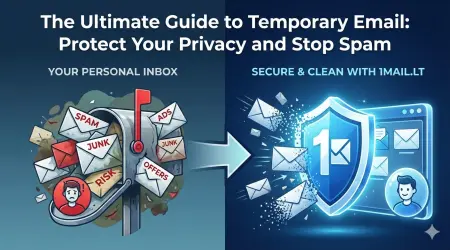
Many developers need a quick way to test GitLab features, join a public project, or try out CI/CD pipelines without exposing their primary email. A temporary email address lets you create an account, verify it, and start working while keeping your personal inbox free from newsletters, spam, or potential phishing attempts.
Step‑by‑Step Sign‑Up with a Temporary Email
- Open 1mail.lt and click the button to generate a new temporary email address.
- Copy the address that appears.
- Go to GitLab sign‑up page and paste the temporary email into the email field.
- Choose a username and password, then complete the CAPTCHA.
- Click "Register". GitLab will send a confirmation link to the temporary inbox.
- Return to 1mail.lt, refresh the inbox, and open the confirmation email from GitLab.
- Click the confirmation link to verify your account.
- You can now log in to GitLab with the username and password you chose.
What Works and What Doesn’t
Works:
- Creating and verifying a new GitLab account.
- Accessing public repositories, cloning code, and using the web IDE.
- Running CI/CD pipelines that do not require external notifications.
- Receiving repository invitations sent to the temporary email (if you keep the inbox alive).
Limits or Does Not Work:
- Account recovery: If you forget your password, GitLab sends a reset link to the email on file. Once the temporary address expires, you lose access to that link.
- Two‑factor authentication (2FA) setup: Some 2FA methods rely on email backup codes; losing the email means losing those backups.
- Receiving important security notices or license updates from GitLab after the temp email disappears.
- Using GitLab’s built‑in email notifications for merge requests or issue comments if the inbox is no longer reachable.
Safety Tips
- Use a strong, unique password for your GitLab account, even if the email is temporary.
- Enable two‑factor authentication with an authenticator app (not email‑based) as soon as the account is active.
- If you plan to keep the account long‑term, consider adding a permanent email address later in the account settings before the temporary one expires.
- Never share the temporary email address publicly; treat it like any other login credential.
- Regularly check the temporary inbox for any important messages from GitLab, especially during the first few days.
Final Thoughts
A temporary email is a handy tool for trying out GitLab without cluttering your main inbox, but remember the limits around account recovery and ongoing notifications. For anything you intend to keep beyond a quick test, add a real email address as soon as you can.
Ready to try? Visit 1mail.lt and generate a free temporary email in one click.